
An FSD detects flame and controls the gas supply if flame is not established or is lost.
A flame supervision device checks that a burner flame is present and controls the gas supply if flame is not established or is lost. The safety system may include a sensor, control and gas valve. It proves flame presence, not safe combustion or clean room air — a distinction that matters across CCN1, cookers, fires and boilers.
What an FSD does
FSD means flame supervision device. You may also see FFD, flame-failure device. The principle is the same in revision terms: the appliance must not continue passing unburnt gas when the flame has gone out or has not been established.
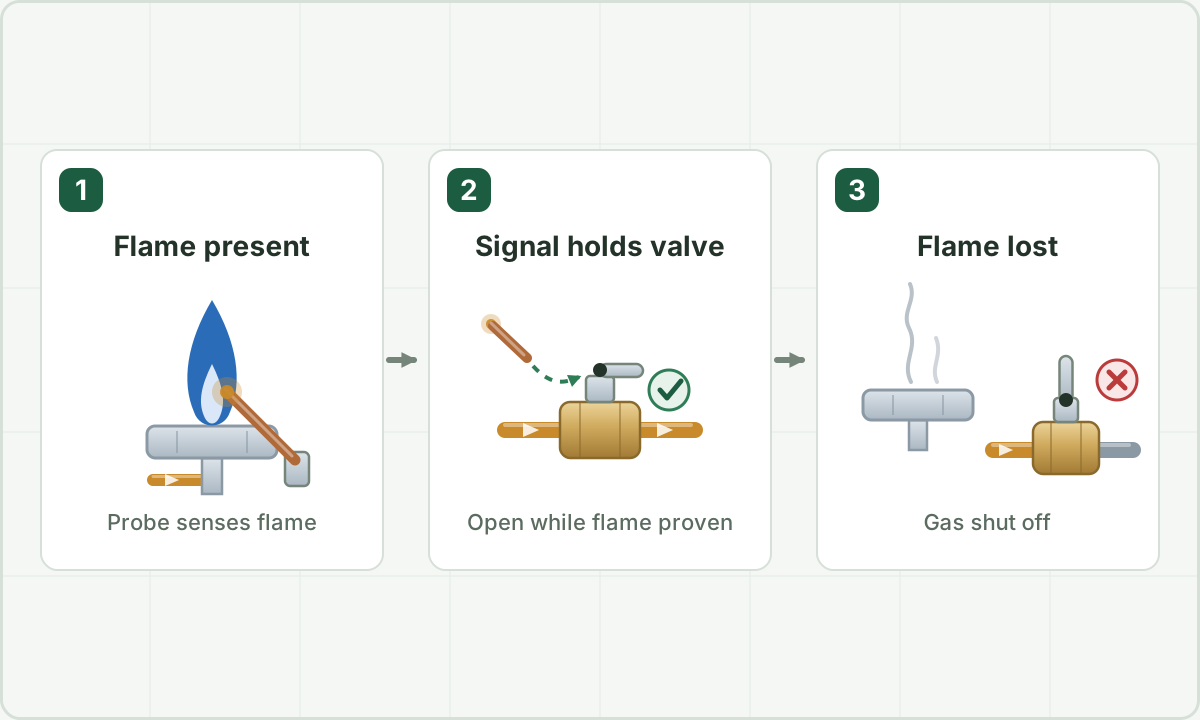
The main FSD types
You do not need to memorise every design, but assessments expect you to recognise the main families and the safety outcome each one delivers.
- Thermoelectric (thermocouple): heat from the pilot or burner flame generates a small voltage — a few tens of millivolts — which energises an electromagnet that holds the gas valve open. Lose the flame and the junction cools, the magnet releases and the valve closes. Closure is not instant, because the thermocouple has to cool first. Typical homes: older fires, cookers, water heaters and pilot-light appliances.
- Flame rectification (ionisation): a flame between the sensing electrode and the burner conducts electricity unevenly, turning an applied AC signal into a small DC current of a few microamps. The burner control looks for that rectified DC component, which is why a simple short circuit does not fake a flame. Detection and shutdown are fast. Typical homes: modern boilers and many automatic-ignition cookers and hobs.
- Atmosphere-sensing (oxygen depletion system, ODS): a precision pilot is designed so that when room oxygen falls below the design level, the flame lifts away from the thermocouple, cools it and shuts the appliance down. It is built around a thermoelectric FSD but protects against vitiated air as well as flame loss. Typical homes: flueless heaters and some open-flued fires.
- Thermopile: a stack of thermocouples giving a larger output that can also power a control circuit — you may meet it on older floor-standing boilers and heaters.
- Ultraviolet and other sensing cells: mainly commercial and industrial burners; know they exist rather than the detail.
Thermocouple, thermopile or ionisation probe?
A common exam and diagnosis mistake is treating these as interchangeable. A thermocouple makes just enough electricity to hold a magnet open; a thermopile makes enough to run a simple control circuit; an ionisation probe makes no useful power at all — it only passes a tiny rectified current that the burner control interprets. Identify which system the appliance uses before reasoning about a fault, because the failure logic is different for each.
Where it appears in assessment
- Cookers and hobs (CKR1 territory): newer domestic cookers and hobs are generally fitted with flame supervision on the burners, but many older appliances still in service are not. Questions often turn on the installation context — settings such as boats and residential park homes carry stricter flame-supervision expectations, so check the current requirements for the installation type rather than assuming one rule.
- Boilers and water heaters (CENWAT territory): flame proving is a stage in the ignition sequence — spark or ignitor, flame established, flame proved within the control’s safety time, then main gas held open. A boiler that lights and then locks out may have a flame-proving fault, but the symptom alone does not identify the failed part. Read the fault code and the manufacturer’s diagnostic sequence.
- Fires and space heaters (HTR1 territory): flame supervision links with spillage checks, the flame picture and the ODS distinction — an atmosphere-sensing pilot shutting down repeatedly can be telling you about the room air, not a faulty component.
- Unsafe situations: a failed, disabled or bypassed flame-safety device is not a minor convenience fault; it belongs in the unsafe-situations procedure.
Common symptoms and what they point to
- The burner lights but goes out when the control knob is released: on a thermoelectric appliance, the safety circuit may not yet be holding the valve open. Releasing the knob before the stated lighting time, an inadequate flame at the sensor, a connection fault or a component fault can produce similar symptoms. It does not prove the thermocouple needs replacing.
- The pilot will not stay lit after the warm-up period: same circuit, but also ask why the flame is weak — a partially blocked pilot gives a cool, lazy flame that never heats the junction properly.
- The appliance sparks, lights briefly, then locks out: think rectification — probe condition and position, the sensing lead, burner earthing, and supply polarity. On many rectification systems a reversed live and neutral or a poor earth can stop flame detection completely, which is why electrical checks appear in gas fault questions.
- An atmosphere-sensing appliance keeps shutting down in one room: consider air supply and ventilation before condemning the pilot assembly.
- A burner is alight but the safety device has been damaged, disabled or bypassed: the appliance may “work”, and it is still not safe to leave in use.
How operation is proved
The revision principle: you prove an FSD by letting it see a flame loss and confirming gas is cut off, following the manufacturer’s instructions for the appliance — for a thermoelectric device that includes allowing for the cooling delay before shutdown. What is never acceptable is wedging, bypassing or “temporarily” defeating the device to keep an appliance running: the safe answers in assessment always preserve the safety chain.
Exam angle
The important answer is rarely “replace the thermocouple” in isolation. The assessment angle is the safe decision: prove the safety device operates, follow manufacturer instructions, do not bypass it, and do not leave an appliance in use if flame supervision cannot be relied on.
FSD, oxygen depletion sensor and CO alarm: different jobs
An ordinary flame supervision device responds to flame presence. It does not measure carbon monoxide in the room, confirm that a flue is clearing properly or detect a gas leak elsewhere in the installation. An appliance can have a proven flame and still be unsafe for another reason.
An oxygen depletion system uses a specially designed pilot to respond to deteriorating air conditions. That additional function does not make it a room CO alarm. A CO alarm detects carbon monoxide; it complements correct installation, ventilation, servicing and the appliance’s own safety controls. None of these replaces the others.
Why a gas hob knob needs to be held in
On a thermoelectric hob, pressing the control allows the burner to light while the thermocouple warms up. The flame then provides the signal needed to hold the safety valve open after the knob is released. The operating instructions specify the lighting sequence and holding time for that model.
The ignition spark and flame supervision have different jobs: creating a flame does not prove the safety circuit has detected it. If the burner repeatedly goes out despite following its normal user instructions, turn it off and arrange a check. Holding or wedging the control in to keep gas flowing defeats the protection.
Quick answers
What does a flame supervision device do?
It proves that flame is present and shuts off, or prevents continued gas flow, if flame is not proven.
Is FSD the same as FFD?
In learner use they are often used for the same safety idea. FSD is flame supervision device; FFD is flame-failure device.
Is an oxygen depletion system the same as an FSD?
They are related but not identical. An ODS is built around a thermoelectric flame-supervision pilot, but its job is to shut the appliance down when room oxygen falls — it protects against vitiated air as well as flame loss.
Where is the FSD on a gas cooker?
On flame-supervised cookers and hobs, look for a small probe tip sitting beside each burner’s flame ports — the thermocouple or sensing electrode. Older cookers may have no flame supervision on the hob burners at all.
Why does a boiler ignite and then lock out?
Loss of the flame signal is one possible cause, but a brief flame followed by lockout is not a diagnosis by itself. The fault code and manufacturer’s checks distinguish sensing, ignition, gas-supply and other control faults.
Can you bypass a flame supervision device for testing?
No. A flame-safety device is part of the appliance safety chain. Assessment answers should favour manufacturer instructions and safe isolation if operation cannot be proved.
How do you check a flame supervision device is working?
A competent gas engineer follows the appliance’s specified flame-failure test and checks that the gas control responds within its stated safety time. Thermoelectric cooling delays and electronic retry or lockout sequences differ, so there is no single timing or reset rule for every FSD. Seeing a flame or hearing the ignition spark alone does not prove the protection works.
Does an FSD protect against carbon monoxide poisoning?
An ordinary FSD is not a carbon monoxide detector. It checks for flame, which can remain present during unsafe combustion or a flue fault. An oxygen depletion system has an additional air-sensing function, but it is still not a substitute for a CO alarm or proper gas-safety checks.
Something wrong, unclear or out of date? Report an issue with this guide.