
Flue flow checks the chimney route; spillage checks that products of combustion are not spilling back into the room while the appliance runs.
Flue flow and spillage testing is where ventilation, combustion and unsafe-situations judgement meet. Candidates often merge the two checks into one vague "smoke test", but assessment wants a clearer chain: can the flue route discharge, does the appliance clear its products, and what action follows if it does not?
Flue flow and spillage decision sequence
Use this as a revision prompt for separating route checks from appliance-in-operation checks. Live testing follows the current standard and appliance instructions.
- Identify appliance type, flue type, room suitability, terminal route and permanent ventilation.
- Inspect visible appliance, flue, chimney, terminal, air vents and signs of damage or leakage.
- Treat flue flow as the route check: products must be drawn through the intended flue path and discharge correctly.
- Only run the appliance where preliminary checks allow it, under the required operating conditions.
- Treat spillage as the appliance-running check: products must not spill from the draught diverter, canopy or relief opening into the room.
- Repeat the judgement under relevant fan or air-moving conditions where the procedure requires it.
- If flow or spillage is unacceptable, follow the unsafe-situations procedure before leaving the appliance available for use.
- Separate flue-flow failure from spillage failure.
- Check air vents and extractor/fan effects.
- Do not use a CO alarm as proof of safe flueing.
- Classify and act before returning an appliance to use.
This card is not a live method statement. Exact timings, smoke sources, test points and actions come from the current procedure and manufacturer instructions.
The difference learners miss
Flue flow is about the chimney or flue route. The question is whether smoke introduced into the flue path is drawn through the route and leaves at the intended terminal, without appearing where it should not.
Spillage is about the appliance running in the room. The question is whether the appliance clears its products of combustion through the flue, or whether evidence spills back into the occupied space.
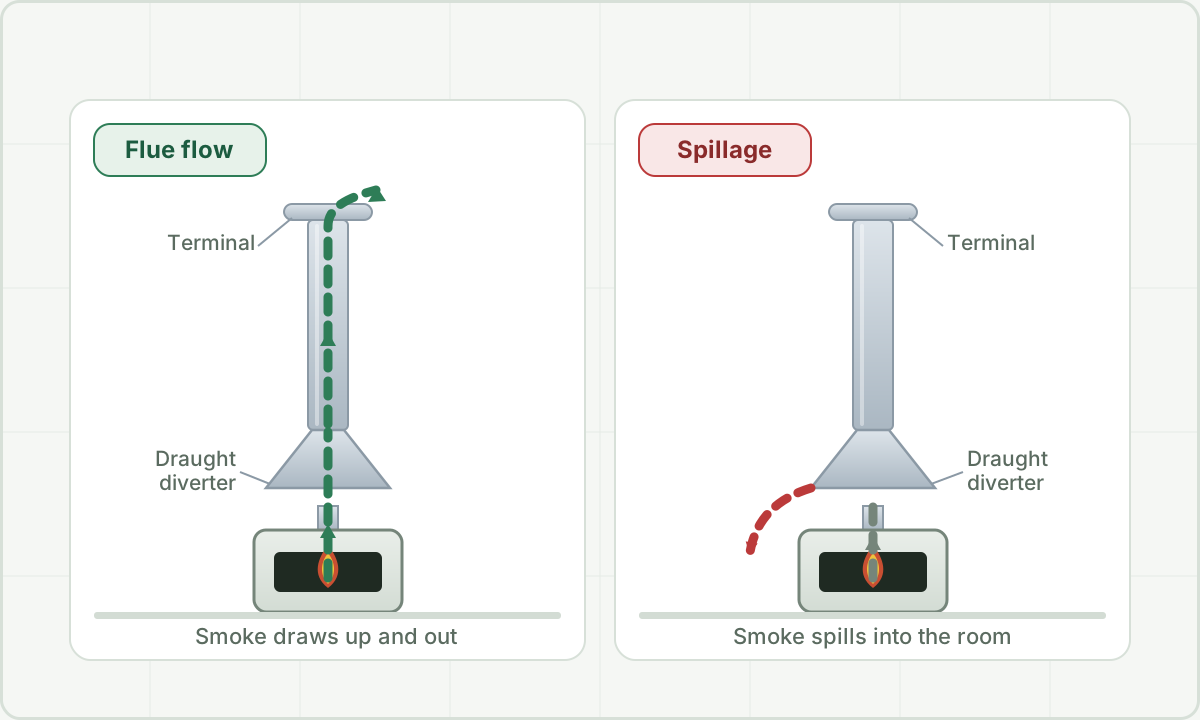
Why open-flued appliances are the focus
Open-flued appliances take combustion air from the room and rely on the flue to remove combustion products. That makes the room, air vents, extract fans, chimney condition and terminal all part of the safety picture. A room-sealed appliance has a different air/flue arrangement, so do not transfer an open-flue spillage routine blindly across appliance types.
Revision sequence
- Identify the appliance and flue type before choosing the test route.
- Check room suitability, permanent ventilation, flue route, terminal and visible condition.
- Prove the flue route before treating the appliance as safe to run.
- Run the appliance only under the conditions required by the current instructions or standard.
- Check for spillage at the correct opening for that appliance design.
- Repeat with relevant fans or air-moving equipment where the procedure requires it.
- Classify and act on failure before leaving the appliance available for use.
Fan and room-pressure traps
Extract fans, cooker hoods, tumble dryers and some warm-air arrangements can pull air from the room and disturb the draw on an open flue. In revision, do not treat the first calm-room pass as the end of the story. Ask whether any installed fan or air mover could create a worse condition that also needs checking.
How it links to CO and combustion
Good flue flow does not automatically prove good combustion, and a CO alarm is not proof that the appliance and flue are safe. Flue checks, ventilation, flame picture, gas rate, analyser readings and unsafe-situations judgement all sit together. The PlumbRevise CO/CO2 ratio tool helps with one part of that wider CPA1-style decision chain.
Common exam mistakes
- Using "smoke test" as a vague answer without saying whether you mean flue flow or spillage.
- Ignoring permanent ventilation or treating a closable window as an air-supply fix.
- Forgetting to consider extractor fans and other room-pressure effects.
- Assuming a CO alarm replaces inspection, testing or servicing.
- Leaving an appliance in use after an unacceptable flue-flow or spillage result.
Which comes first: flue flow or spillage?
For an open-flued appliance requiring both checks, the flue-flow check belongs with the preliminary checks before the appliance-running spillage test. Establish that the intended route is available before relying on it to carry combustion products. A pass at one stage does not replace the other.
Keep a flue-flow check separate from other specified chimney integrity or leakage tests, too. “Smoke went up the chimney” is not proof of every aspect of flue construction, condition or appliance safety.
A pass with the extractor off is only part of the result
Consider an appliance that clears its products with the room extractor off but spills when the required fan test is performed. The first pass does not cancel the later failure. Record the fan and door conditions, assess the cause and follow the unsafe-situations procedure; leaving a window open or asking the occupier not to use the fan is not a completed remedy.
Inspection remains a separate part of the decision. A damaged flue, obstructed permanent vent or unsuitable terminal position needs assessment even if smoke appears to clear during one test. Choose the classification from the actual defect and risk, rather than calling every departure the same thing.
Warm-up time and retesting depend on the appliance
The manufacturer specifies the operating condition, warm-up period, smoke-test position and any permitted repeat test. Some instructions allow one further warm-up period after an initial failure; that is not a general instruction to keep running and retesting any spilling appliance until it passes.
Find those requirements before starting the test. If the prescribed sequence produces an unacceptable result, follow the required safety actions. Do not invent extra waiting time or change the test position to obtain a pass.
Quick answers
What is the difference between flue flow and spillage?
Flue flow checks whether the flue or chimney route draws and discharges correctly. Spillage checks whether products of combustion spill back into the room while the appliance is operating.
How long is a spillage test?
There is no single public shortcut time to memorise. Follow the appliance instructions, current standard and assessment-centre method; many failures depend on warm-up, appliance design and fan conditions.
What should happen if an appliance fails a spillage test?
It should not be left in normal use. The engineer must follow the current unsafe-situations procedure, make the situation safe and rectify the cause before the appliance is returned to service.
Does a CO alarm mean the flue is safe?
No. A carbon monoxide alarm is a backup warning device. It does not replace correct installation, inspection, servicing, flue-flow checks or spillage checks.
What is the spillage test procedure, step by step?
Complete the preliminary inspection and required flue-flow check, then follow the appliance instructions for operation, warm-up, smoke position and fan/door conditions. Follow their limits on repeat testing and the required action for an unacceptable result. The revision card explains the decisions; exact live-test steps come from the applicable procedure for that appliance.
Does a passed spillage test prove the whole installation is safe?
No. It is one check under specified conditions. Ventilation, flue condition and siting, appliance operation and other required safety checks still need satisfactory results. A visible defect cannot be dismissed simply because a smoke test passed.
Something wrong, unclear or out of date? Report an issue with this guide.